Summer Storm Season in Dunwoody: Water Damage Preparedness
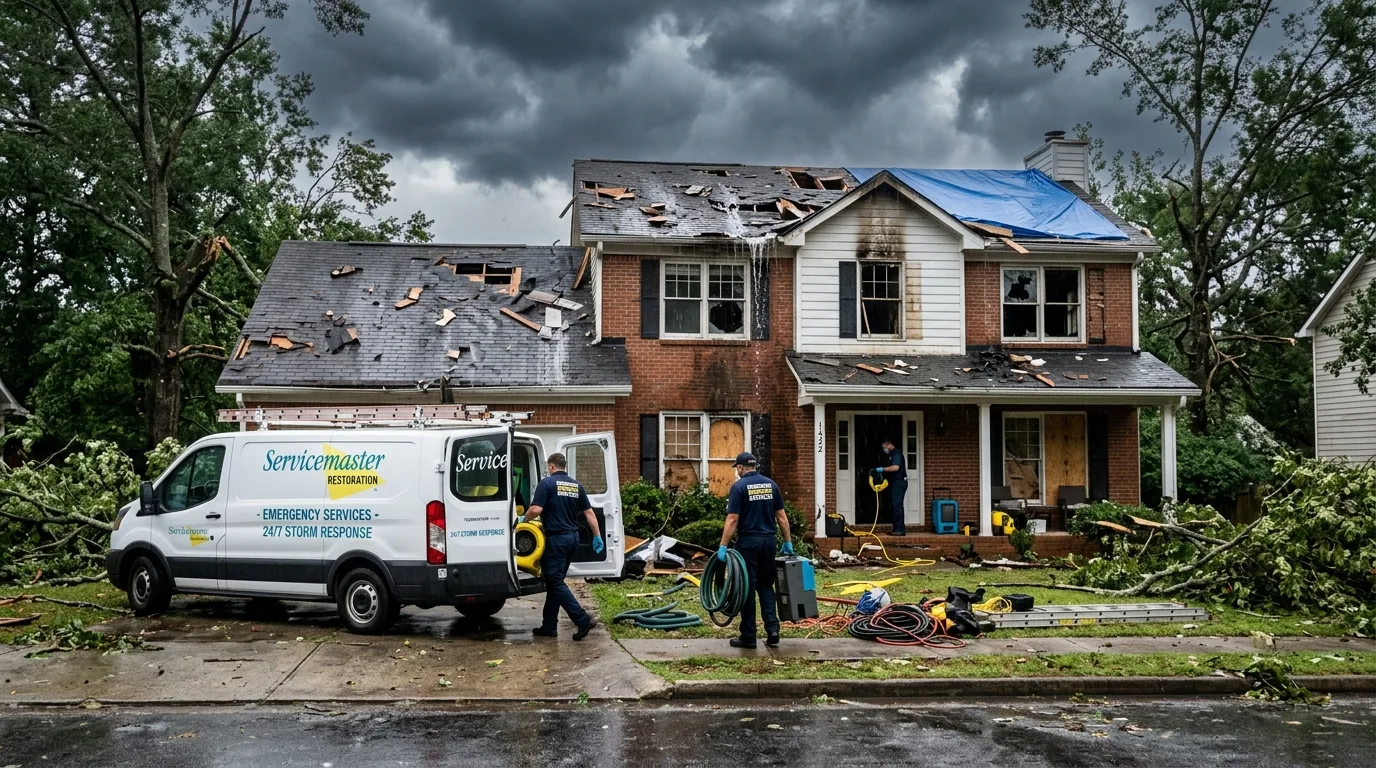
June through September is peak water damage season in Dunwoody, Georgia. Summer thunderstorms deliver more rainfall in shorter timeframes than at any other time of year — Dunwoody receives over 52 inches of rainfall annually, with a disproportionate share arriving in intense convective events during summer afternoon hours. For Dunwoody homeowners, understanding the specific damage risks of storm season and taking targeted preventive steps before the season begins is the difference between a manageable incident and a catastrophic event. In this guide, we cover the storm damage risks specific to Dunwoody and DeKalb County, what preparation steps have the highest return, and what to do in the hours after a major storm event.
Storm Season Water Damage in Dunwoody?
We respond 24/7 during storm season — extraction and restoration throughout DeKalb County. Call (877) 698-1311.
Why Dunwoody’s Summer Storms Are Particularly Damaging
Dunwoody’s summer storm pattern is driven by Atlanta’s urban heat island effect combined with the Gulf and Atlantic moisture flows that reach Georgia during summer months. Afternoon convective storms — thunderstorms that develop rapidly from surface heating — are the dominant pattern, and they are capable of delivering 2–4 inches of rain in under two hours. This rainfall intensity far exceeds the infiltration capacity of even well-maintained Dunwoody landscaping, and the Piedmont red clay beneath DeKalb County becomes saturated within the first 15–30 minutes of a major event.
The consequences for Dunwoody homeowners are predictable: rapid surface runoff toward foundations, overwhelmed gutters and downspouts, sump pump systems tested to their limits, and window wells that fill faster than their drainage capacity. The 22-acre Dunwoody Nature Center and the broader watershed it sits within means that properties near the nature center and throughout the Meadowlake community carry elevated flood risk compared to higher-elevation portions of Dunwoody.
A secondary storm risk specific to Dunwoody’s environment: power outages during summer storms disable sump pumps at precisely the moment of maximum water inflow. A home with a functioning sump pump that loses power during a storm event can flood in 30–60 minutes. Battery backup sump systems are the most valuable single preparation investment many Dunwoody homeowners can make.
Pre-Storm Season Checklist for Dunwoody Homes
Gutters and downspouts: Clean gutters before storm season begins (May at the latest) and confirm downspouts discharge 6+ feet from the foundation. Clogged gutters overflow at the roofline and pour concentrated water at the foundation. Properly functioning gutters and downspouts are the first line of defense against basement and crawl space flooding.
Sump pump testing: Test your sump pump by pouring water into the sump pit and confirming the float activates the pump and water is discharged. Inspect the discharge line for blockages. Install a battery backup system if you don’t have one — a single summer storm power outage without backup can flood a finished Dunwoody basement.
Window well maintenance: Inspect window well drainage fill (crushed stone). Over time, soil and organic material fills the drainage layer, reducing water intake capacity. Replace or supplement drainage fill if compacted. Ensure window well covers are secured and draining properly.
Roof inspection: Summer storms put roofs under intense stress. Have a roofer inspect flashings, shingles, and penetrations (chimneys, vents, skylights) before storm season. A compromised flashing allows rain to enter wall cavities before it becomes visible on interior surfaces.
Grading inspection: Walk the perimeter of your Dunwoody home and confirm that soil grade slopes away from the foundation on all sides. Settled areas adjacent to the foundation create water collection zones. Fill and regrade low spots in spring before storm season.
Know where your shutoff valve is: Locate and test your main water supply shutoff valve. If a storm event damages a supply line or if a concurrent plumbing failure occurs during storm flooding, rapid shutoff is critical.
Pre-Storm Preparation for Dunwoody Homeowners
If preparation fails, we respond immediately — 24/7 storm season coverage. Call (877) 698-1311.
What to Do in the Hours After a Major Dunwoody Storm
Immediately after the storm — exterior inspection: Walk the perimeter of your home before entering if standing water is present. Look for: window wells filled with water, downspouts displaced from their drainage paths, grading that has allowed water to accumulate against the foundation, any visible structural damage.
Interior inspection: Starting from the lowest level, check for water entry: floor drains, sump pit (is the pump running or pumped out?), wall base moisture, window sill moisture, and ceiling staining if you have an upper floor or attic above. Use a flashlight in crawl spaces if you have them — a brief inspection can identify flooding that would otherwise be discovered only when mold is smelled.
Document before cleanup: If you find water damage, photograph everything before touching it. Your insurance claim depends on original-condition documentation.
Call immediately for professional extraction: Do not attempt to manage standing water with household equipment. Every hour of delay in Dunwoody’s summer climate increases mold risk — the 24-hour colonization window applies from the moment water entered the structure, not from when you call. See our detailed emergency response guide for more on what to do during emergency water extraction.
Practical Uses
Installing a water alarm sensor: Inexpensive wireless water sensors (under $30) placed near floor drains, sump pits, and under major appliances provide early warning of water accumulation before it becomes a flooding event. This is especially valuable during work hours when the house is unoccupied.
Vegetation management: Tree roots grow toward moisture sources — including drain tiles and sewer laterals. Dunwoody’s mature tree canopy, while beautiful, creates root infiltration risk in older drain systems. Annual root treatment in sewer laterals (chemical root deterrents, not cutting) is maintenance worth considering for homes in wooded Dunwoody neighborhoods.
Understanding your flood map status: FEMA’s flood map for DeKalb County is accessible at msc.fema.gov. Understanding your property’s flood zone designation affects insurance requirements and risk planning. The Dunwoody Nature Center drainage watershed affects flood risk for nearby properties that standard flood maps may not fully capture. Contact the City Engineer at 678-382-6809 for flood plain questions specific to your property.
Creating a water damage emergency kit: Know the location of your main water shutoff, have a plumber’s number and a restoration company’s number saved in your phone, and know the location of your insurance policy documents (physical or digital). In the first 30 minutes of a flooding event, these resources matter far more than any equipment you could have on hand.
Frequently Asked Questions
How do I know if the flooding in my Dunwoody area is from storm water or my own plumbing?
Storm water flooding typically correlates with the storm event timing — water appears during or immediately after heavy rain and enters at or below grade (basement walls, window wells, floor drains). Plumbing failures typically occur without regard to weather and produce water at a specific source. If you can identify a plumbing source (running water sound, visible pipe break), shut off the main supply and call for restoration. If flooding correlates with the storm and appears to enter from the exterior, call for restoration and contact your insurance carrier. See our coverage breakdown in the water damage vs. flood damage guide.
Are Dunwoody’s new homes less vulnerable to storm flooding?
Newer construction in Dunwoody — post-2000 developments in areas like Heritage at Dunwoody — was designed to current stormwater management standards and typically includes improved drainage systems, proper lot grading, and sump pump infrastructure. These homes are less vulnerable to the surface drainage failures that affect older construction. However, they are not immune: undersized sump systems during extreme storm events, tight construction envelopes that make interior humidity harder to manage, and CPVC supply lines that are now aging create their own risk profile. See our complete water damage guide for Dunwoody for a full risk framework.
Can I claim storm damage to my HVAC or outdoor unit on homeowner’s insurance?
Storm damage to HVAC systems — including hail damage to outdoor condenser units and interior water damage from ductwork flooding — is generally covered under the dwelling or personal property portions of a standard HO-3 policy. Document damage immediately after the storm with photos and contact your insurance carrier promptly. Keep records of any temporary emergency mitigation costs, as many policies cover reasonable emergency expenses to prevent further damage. See our DeKalb County insurance claim guide.
Dunwoody Storm Season — We're Ready When You Need Us
24/7 emergency response throughout storm season. Call Dunwoody Water Damage Restoration at (877) 698-1311.
Related resources: