Mold After Water Damage — Why Dunwoody Homes Are at Risk
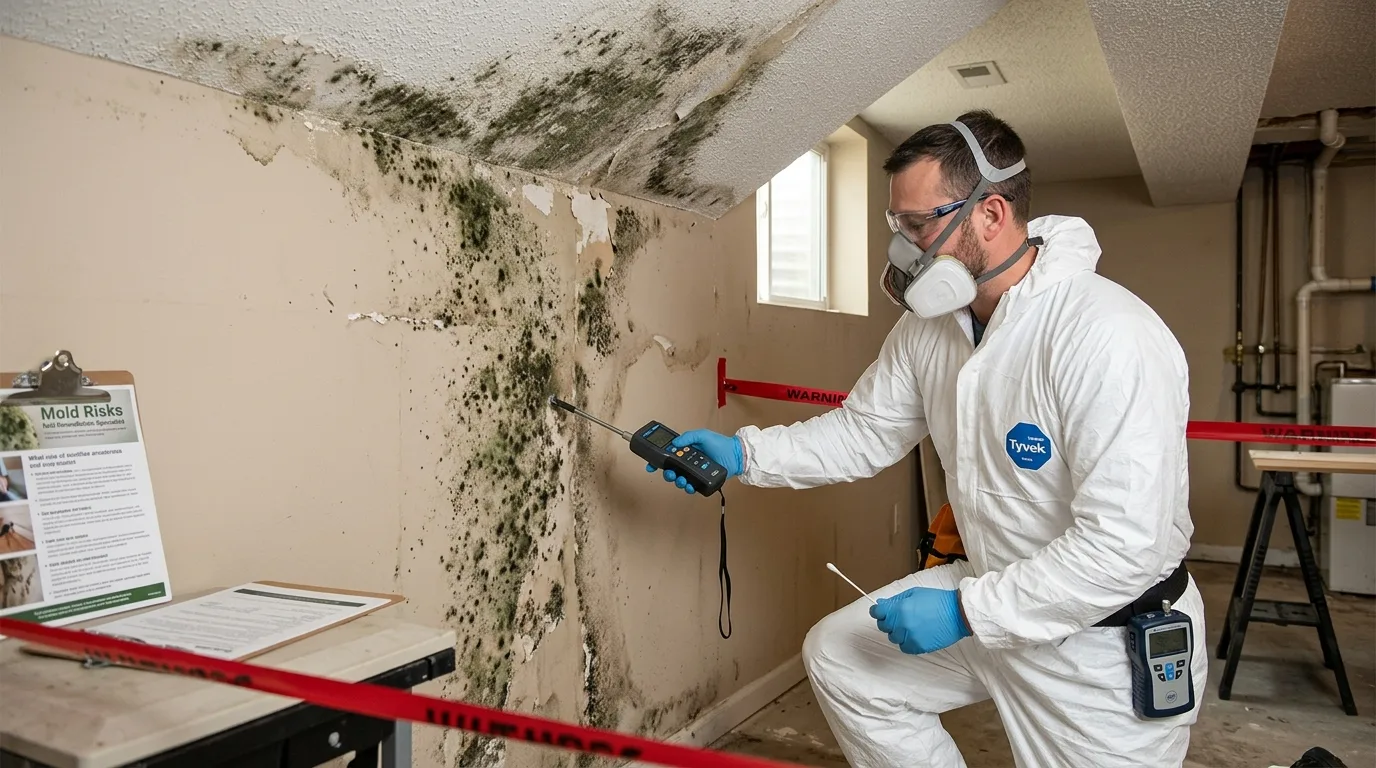
Every Dunwoody homeowner who has dealt with water damage eventually asks the same question: how long before mold becomes a problem? The honest answer for Dunwoody, GA is shorter than most people expect — and shorter than national guidelines suggest. When you factor in Georgia’s summer temperatures, the ambient humidity that keeps Dunwoody’s air near saturation for months at a time, and the tight construction envelopes of newer homes throughout Heritage at Dunwoody and Wynterhall that trap moisture inside wall cavities, the window between water damage and mold establishment is not 48 hours — it’s often closer to 18–24 hours during peak summer conditions. In this guide, we explain the specific mold risk factors for Dunwoody homes, what professional mold remediation looks like, and how to protect your family and property.
Mold Risk After Dunwoody Water Damage
Fast response prevents remediation. Call Dunwoody Water Damage Restoration at (877) 698-1311 — 24/7.
Why Dunwoody Homes Have Elevated Mold Risk
Three factors combine in Dunwoody to create a mold environment that is genuinely more hazardous than in most comparable markets.
Temperature: During Dunwoody’s June through September storm season — which is the same period as peak flooding events — indoor temperatures in the 75–85°F range provide optimal mold growth conditions. Unlike winter water damage events where cooler temperatures slow mold colonization, summer events in Dunwoody offer mold ideal thermal conditions from the moment water intrusion occurs.
Humidity: Dunwoody’s ambient relative humidity during summer regularly exceeds 80% outdoors, and even in air-conditioned spaces, humidity can climb rapidly when water damage creates interior evaporation that the HVAC system cannot keep pace with. Mold spores — which are present on all organic building materials — need only approximately 60% relative humidity to germinate and begin growing. Dunwoody’s indoor summer humidity during a water damage event exceeds this threshold comfortably.
Construction characteristics: Dunwoody’s 1985–2005 housing stock features tight construction envelopes designed for energy efficiency — which also means wet materials inside walls dry much more slowly than in older, more drafty construction. Water that enters a wall cavity in a Heritage at Dunwoody home with closed-cell foam insulation can remain wet for weeks while the wall surface appears dry, providing continuous mold growth conditions inside the cavity.
How Fast Mold Grows in Dunwoody After Water Damage
The EPA’s 24–48 hour benchmark for mold colonization is a general guideline developed for average indoor conditions. In Dunwoody during July — with indoor temperatures at 80°F, relative humidity near 80%, and warm wet materials providing both moisture and organic substrate — mold establishment can begin in 12–18 hours on materials with high organic content (drywall paper facing, wood framing, carpet backing).
This is not a reason to panic — it is a reason to act immediately. The 24-hour response protocol exists precisely because this window is real and narrow in Dunwoody’s climate. A homeowner who discovers a pipe burst at 8am and calls immediately has a dramatically different outcome than one who waits until Monday morning (if the event occurs over a weekend) — not because of how the water was extracted, but because of what was growing inside the walls during the delay.
Water Damage Just Happened? Call Now — 24/7
Antimicrobial treatment in the first hour dramatically reduces mold risk. (877) 698-1311.
Types of Mold Found in Dunwoody Homes
Cladosporium: The most common indoor mold in Georgia — appears on drywall, carpet, and HVAC components. Dark green to black appearance. Triggers respiratory symptoms in sensitive individuals.
Aspergillus: Common on building materials, insulation, and dust accumulations in wet HVAC systems. Multiple species; some produce mycotoxins. A frequent finding in Dunwoody HVAC ductwork after flooding events.
Stachybotrys chartarum (Black mold): The species most commonly associated with “toxic mold.” Develops on materials with sustained high cellulose content and persistent moisture — paper-faced drywall that remains wet for more than a week is a primary substrate. The name “black mold” can refer to multiple mold species; identification by species requires laboratory analysis.
Penicillium: Often found on water-damaged wood and insulation. Blue-green appearance. Associated with respiratory irritation and, in some species, mycotoxin production.
Important note: The species identity of mold matters less than its presence in the structure. All mold growth inside walls and structural materials warrants professional remediation, regardless of species. The relevant question is not “is it black mold?” but “is it growing in the structure?”
What IICRC S520 Mold Remediation Looks Like in Dunwoody
The IICRC S520 standard governs professional mold remediation. The process:
- Moisture investigation: Identify all active moisture sources contributing to mold growth. Remediation without moisture source correction is temporary.
- Containment: Plastic sheeting and negative air pressure prevent cross-contamination to unaffected areas.
- HEPA air scrubbing: Continuous HEPA filtration captures airborne spores released during removal.
- Porous material removal: Mold-contaminated drywall, insulation, carpet, and paper materials are removed and sealed for disposal. These materials cannot be sanitized to a safe standard.
- Surface treatment: Non-porous structural surfaces are HEPA vacuumed, wire-brushed, and treated with EPA-registered antimicrobial agents.
- Dehumidification: Drying phase verified by moisture meters.
- Post-remediation testing: Air samples confirm mold spore counts return to normal background levels before reconstruction.
In Dunwoody, post-remediation testing is particularly important because the elevated background humidity means mold spore counts in outdoor air are higher than in drier markets — what constitutes “normal” needs to be calibrated to local outdoor conditions.
Cost of Mold Remediation in Dunwoody
Mold remediation in the Atlanta metro costs $2,664–$8,437 for residential jobs. Larger infestations involving multiple rooms, HVAC systems, or crawl spaces are at the upper range. The cost of prevention — IICRC antimicrobial treatment at the time of water damage response — is a fraction of this range. When water damage is addressed within hours and antimicrobial treatment is applied to all affected surfaces before mold establishes, formal remediation is often avoided entirely.
Frequently Asked Questions
My water damage was “just a small leak” — do I still need mold testing?
The size of the visible water damage is not the primary determinant of mold risk — it’s the duration and temperature conditions. A small leak in a warm wall cavity that went undetected for two weeks has higher mold probability than a major pipe burst that was addressed within an hour. If the water event was discovered more than 24–48 hours after it began, or if there is any musty smell or discoloration, professional assessment is warranted. See our hidden water damage guide for indicators.
Can I clean mold myself with bleach in Dunwoody?
Surface mold on non-porous materials (tile grout, shower caulk) can be addressed with EPA-registered cleaners including diluted bleach. However, any mold on porous materials — drywall, wood, carpet, insulation — requires professional remediation. Bleach does not penetrate porous materials to kill mold at the root structure, and it does not address the moisture source. DIY surface cleaning of drywall mold in Dunwoody typically results in recurrence within weeks. See our mold remediation service page for the professional approach.
Will my insurance pay for mold remediation in Dunwoody?
When mold is a direct result of a covered water damage event (burst pipe, appliance failure) and was promptly reported, most HO-3 policies cover mold remediation up to the policy limit or a mold sublimit — many policies cap mold coverage at $5,000–$10,000. If mold developed from a gradual, unreported leak or from flooding not covered by your policy, mold coverage may be excluded. See our insurance claim guide for DeKalb County for documentation strategies.
IICRC S520 Mold Remediation in Dunwoody
Safe removal with post-remediation clearance testing. Call Dunwoody Water Damage Restoration at (877) 698-1311.
Related resources: