Water Damage vs. Flood Damage: What's Covered in Dunwoody?
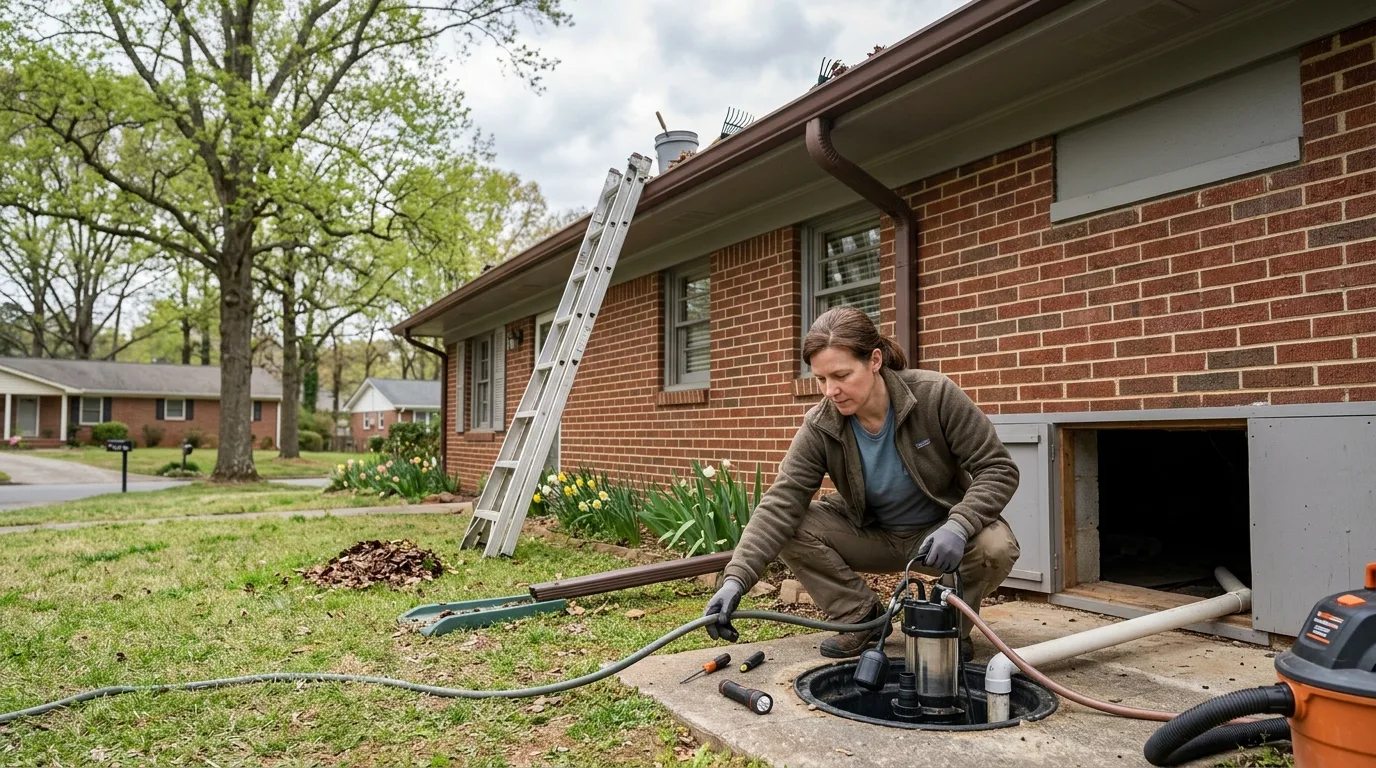
One of the most financially consequential misunderstandings among Dunwoody homeowners is the difference between “water damage” coverage and “flood damage” coverage. Many homeowners assume their standard homeowner’s policy covers any water-related damage. It doesn’t. The distinction between these two coverage types can determine whether a claim is fully paid, partially paid, or denied outright — and in Dunwoody’s storm-prone environment, understanding this difference before a storm event is critical. In this guide, we explain the coverage boundary, which policy applies to common Dunwoody water damage scenarios, and what to do if you discover you have the wrong coverage.
Document Your Dunwoody Water Damage Claim Correctly
We provide the documentation your carrier needs — and we know the coverage distinctions. Call (877) 698-1311.
The Core Coverage Distinction
Homeowner’s insurance (HO-3) covers water damage from internal sources — plumbing failures, appliance malfunctions, and storm damage that allows water to enter through a compromised roof or window. The key concept: the water must originate from within the home’s systems or from above (rain entering through a storm-damaged opening).
NFIP flood insurance (National Flood Insurance Program) covers inundation from external water sources — rising water from storms, overflowing rivers or streams, and surface runoff that enters at grade level. The key concept: the water comes from outside and below, not from within the home’s systems.
The boundary sounds clear but becomes ambiguous in practice. A summer thunderstorm that damages your Dunwoody roof, allowing rain to enter, is a homeowner’s insurance event. The same storm that overwhelms drainage and allows surface runoff to enter your basement through the window wells is a flood event requiring NFIP coverage.
Common Dunwoody Scenarios: Which Coverage Applies
Burst pipe in an upstairs bathroom — Homeowner’s insurance. Supply line failure is an internal plumbing event. Category 1 clean water. Standard HO-3 covers this. Most common sudden water damage event in Dunwoody’s CPVC-era homes.
Summer storm pushes water through foundation — NFIP flood insurance. External rising or flowing water entering at or below grade is a flood event. Standard HO-3 typically excludes this. Dunwoody homeowners without NFIP flood coverage who experience this scenario often discover mid-claim that their homeowner’s policy does not apply.
HVAC condensate overflow damages ceiling and wall — Homeowner’s insurance. HVAC overflow is an internal systems failure. Covered under standard HO-3 as a sudden and accidental event.
Municipal sewer backup during storm — Ambiguous. May be covered by a sewer backup endorsement on the HO-3 policy, but not by NFIP flood insurance (sewer backup is explicitly excluded from NFIP coverage). This is the coverage gap most Dunwoody homeowners encounter during summer storm season when combined sewers overflow into residential drains.
Roof damage from storm allows rain penetration — Homeowner’s insurance. Wind-driven rain entering through storm-damaged roofing is covered under HO-3. The storm damage to the roof itself is also covered. This is distinct from water entering through an undamaged roof during a wind event.
Water enters through foundation cracks during heavy rain — Ambiguous/Flood. Water entering through foundation cracks due to hydrostatic pressure from exterior storm water is generally treated as flooding by HO-3 carriers, not as a covered water damage event. NFIP flood insurance would apply.
Flood or Water Damage? We Help You Document Correctly
Proper documentation determines coverage. Call Dunwoody Water Damage Restoration: (877) 698-1311.
NFIP Flood Insurance in Dunwoody
NFIP flood insurance is available through licensed insurance agents and is backed by the federal government. In Dunwoody, most properties are NOT in Special Flood Hazard Areas (SFHAs) — the high-risk flood zones where NFIP purchase is mandatory for federally backed mortgages. However, being outside the SFHA does not mean flooding is impossible — it means the statistical flood probability is lower. Dunwoody’s DeKalb County location, red clay soil, and 52+ inches of annual rainfall create genuine flood risk even for properties outside designated SFHAs.
NFIP flood policy limits: $250,000 for structure coverage, $100,000 for contents. The policy covers the building’s foundation elements, electrical and plumbing systems, HVAC equipment, appliances, permanently installed cabinets and paneling, and wall-to-wall carpeting. It does not cover landscaping, currency, precious metals, most self-propelled vehicles, or temporary housing costs.
NFIP waiting period: NFIP flood policies have a 30-day waiting period between purchase and the policy taking effect (with limited exceptions for loan closings). If you don’t currently have flood insurance, purchase it now — do not wait until a storm is forecast.
Practical Uses
Annual policy review: Review both your HO-3 policy and any NFIP or private flood policy annually with your insurance agent. Premium changes, coverage limit adjustments, and endorsement availability change. What was adequate coverage when you purchased your Dunwoody home may no longer reflect the current replacement cost of your property.
Sewage backup endorsement: If you do not have a sewer or drain backup endorsement on your HO-3 policy, add it. Cost is typically $40–$150 per year. Given Dunwoody’s summer sewer stress during storm events, this endorsement provides coverage for one of the most common — and expensive — water damage scenarios.
Understanding the NFIP claims process: NFIP claims are administered through your insurance agent but processed by FEMA-certified adjusters. The process is distinct from standard HO-3 claims. Document flood damage with detailed photos, secure damaged property against further damage, and contact your agent immediately.
Coordinating overlapping claims: Some events may trigger both HO-3 and NFIP coverage simultaneously — for example, a storm that damages the roof (HO-3) and also causes flooding at the foundation level (NFIP). Filing both claims with proper documentation of the distinct damage causes is appropriate and legal.
Frequently Asked Questions
I thought my homeowner’s insurance covered flooding — how do I find out what I actually have?
Read the exclusions section of your HO-3 policy. All standard HO-3 policies include a “flood” exclusion that defines flood broadly as surface water, overflow from bodies of water, runoff, mudslide, or similar. If you have an NFIP or private flood policy in addition to your HO-3, you have separate flood coverage. If not, you are relying solely on your homeowner’s policy, which excludes external flooding. Contact your insurance agent for clarity on your specific coverage. See our DeKalb County insurance claim guide for the broader claim process.
Does Dunwoody require flood insurance?
Dunwoody does not require flood insurance as a city mandate, but federally backed mortgage lenders (Fannie Mae/Freddie Mac, FHA, VA) require NFIP or equivalent flood insurance for properties in designated SFHAs. If your Dunwoody property is in an SFHA and you have a federally backed mortgage, your lender may have already required this coverage. If your property is outside the SFHA and you have a conventional mortgage, flood insurance is optional but, for Dunwoody’s conditions, advisable.
Can I file a water damage claim if I don’t know whether it’s a homeowner’s or flood event?
File your claim as soon as possible and let your adjuster determine coverage classification — that is their role. Provide detailed documentation of the event origin: photos of the water source (if identifiable), weather data for the date of the event, and the restoration company’s scope of work documenting water category and likely source. The more documentation you provide, the better positioned your claim is. Our team provides complete event documentation as part of our restoration service.
Dunwoody Water Damage — Full Documentation Service
We document for both homeowner's and flood insurance claims. Call (877) 698-1311.
Related resources: