Do You Need a Permit for Water Damage Repair in Dunwoody?
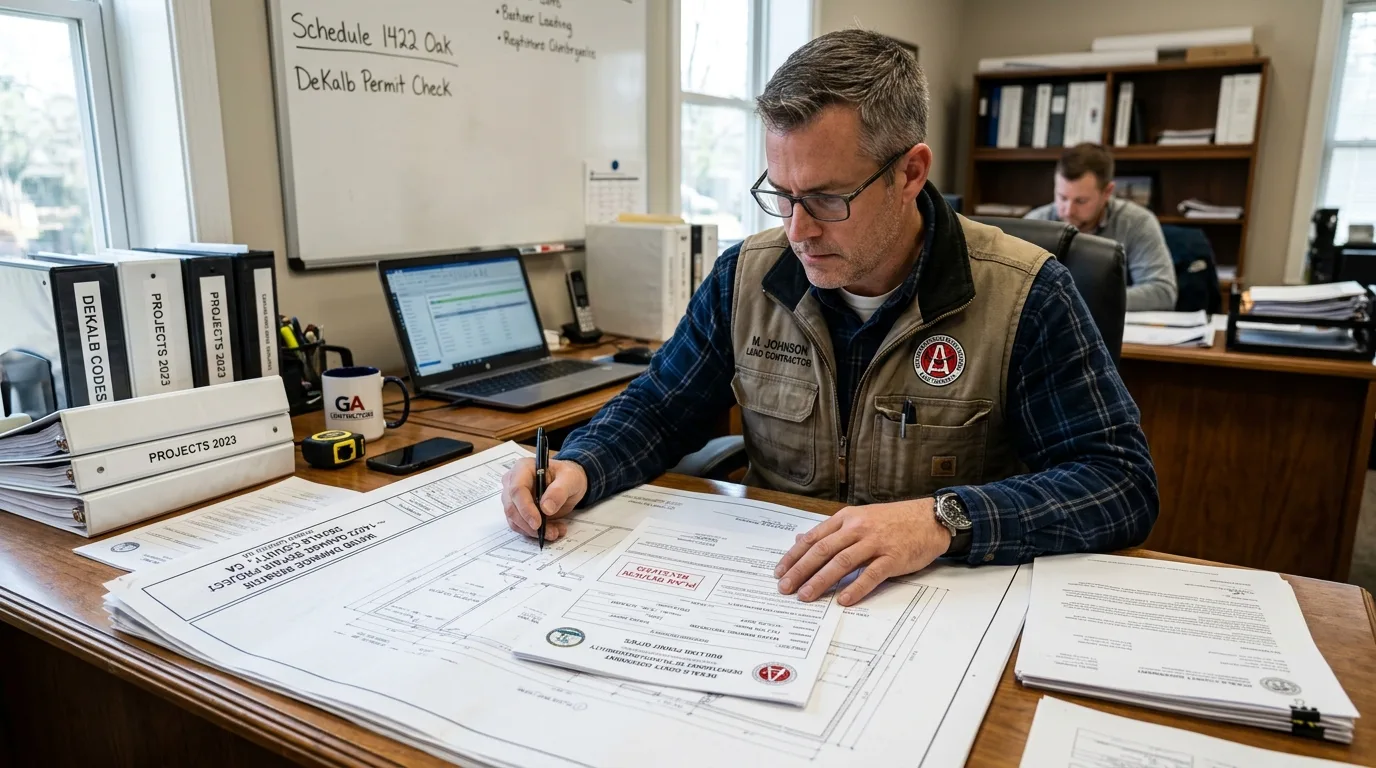
One of the most common questions Dunwoody homeowners ask after a water damage event is whether they need a permit for the repairs — and most get an incomplete or incorrect answer from contractors who either over-simplify (“you don’t need permits for any of this”) or over-complicate it. The honest answer for Dunwoody, GA is: it depends on what work is being done. In this post, we break down exactly when permits are required for water damage repair in Dunwoody, how the permit process works through the city’s Community Development Department, and why pulling the right permits actually protects you financially during the insurance claim process.
Water Damage Repair in Dunwoody?
We coordinate all permit requirements as part of our full restoration service. Call (877) 698-1311.
Why Permits Matter for Water Damage Repairs
The permit question often gets dismissed as bureaucratic overhead, but for Dunwoody homeowners dealing with insurance claims, unpermitted work carries real financial risk. If a repair is done without a required permit and your home later experiences another water damage event, insurance carriers can deny coverage for the original repair on the grounds that unpermitted work does not meet code. Unpermitted work also complicates real estate transactions — home inspectors and buyers’ attorneys in Dunwoody’s competitive market will flag unpermitted improvements, particularly in a neighborhood like Heritage at Dunwoody where buyer due diligence is thorough.
Georgia law O.C.G.A. 43-14 requires that all persons contracting plumbing, electrical, HVAC, and certain structural work hold appropriate Georgia licenses. This isn’t just a licensing technicality — it means the contractor doing your plumbing or electrical repair following water damage must be licensed by the state of Georgia, and that their work must be inspected and permitted through the city.
What Triggers a Permit in Dunwoody
Water extraction and structural drying: No permit required. These mitigation services — extraction equipment, dehumidifiers, antimicrobial treatment — are not building work and do not require permits from Dunwoody’s Community Development Department.
Drywall removal and replacement: Generally requires a building permit when replacing more than minor areas. The threshold varies by project scope, but any structural element replacement as part of water damage reconstruction should be permitted.
Plumbing repair or replacement: Requires a plumbing permit. This includes: replacing a burst water supply line, replacing a water heater (specifically requires plumbing AND gas permits per Dunwoody’s permit FAQs), repairing or replacing drain lines, sump pump installation.
Electrical work: Any repair or replacement of electrical components damaged by water requires an electrical permit. This includes wiring, outlets, panels, and fixtures.
HVAC work: Repair or replacement of HVAC components — including ductwork damaged by flooding — requires a mechanical permit.
Interior French drains / waterproofing: Structural waterproofing systems require a permit, as they constitute modification of the foundation drainage system.
Structural elements: Any repair of load-bearing elements damaged by water requires a structural permit and inspection.
We Handle Permits in Dunwoody — You Focus on Recovery
Our team coordinates with the Community Development Department on your behalf. Call (877) 698-1311.
How to Pull a Permit in Dunwoody
The City of Dunwoody Community Development Department manages permits through the Central Square online portal at dunw.csqrcloud.com/community-etrakit/. The permit desk can be reached at 678-382-6821 or permits@dunwoodyga.gov.
For simple residential interior renovations (including standard water damage reconstruction), same-day permits are sometimes available. More complex work — structural elements, systems work — takes longer. If your project involves flood plain questions, the City Engineer handles those inquiries at 678-382-6809.
What the permit process looks like:
- Contractor submits permit application with scope of work and plans (if required)
- Dunwoody reviews the application — timing varies by complexity
- Permit is issued and work begins
- Inspections occur at designated stages (rough-in, final)
- Final inspection and permit closure
Additional permits that may be required: Depending on the scope of work, permits may also be needed from DeKalb County, Georgia DOT (for work affecting right-of-way), GSWCC (Georgia Soil and Water Conservation Commission, for significant land disturbance), or the Environmental Protection Division for environmental concerns.
Practical Uses
Water heater replacement: One of the most frequently triggered permit requirements after water damage. Dunwoody specifically requires plumbing AND gas permits for water heater replacement. A contractor who replaces a water heater without permits is leaving you exposed.
Basement restoration with waterproofing: If your basement flooding requires installation of an interior French drain or sump system, permit that work. In DeKalb County, properly permitted waterproofing also creates a documented record of the work that has value when you eventually sell the property.
Insurance documentation: Permits create a documented paper trail showing repairs were done to code and inspected. This documentation can be the difference between a full insurance payout and a dispute over whether the repair meets Georgia building standards.
Renovation permits vs. repair permits: If your water damage restoration overlaps with a planned renovation (you were already going to replace the kitchen floor — now the water damage gives you the opportunity), coordinate with the permit office to ensure the work is properly classified. Permit fees in Dunwoody start at a minimum of $150 for simple work.
HOA considerations: Many Dunwoody neighborhoods — Redfield, Village Mill, and others — have HOAs with Architectural Review Board requirements for exterior work. Verify HOA requirements in addition to city permit requirements for any work visible from the street.
Frequently Asked Questions
Does water damage cleanup require a permit in Dunwoody?
No — the mitigation phase (extraction, drying, antimicrobial treatment) does not require permits. Only construction and systems work during the reconstruction phase triggers permit requirements. See the breakdown above for specific triggers.
What happens if a water damage contractor does unpermitted work?
The immediate risk is that the work may not meet Georgia building code, creating safety issues and potential insurance claim problems. If discovered during a sale, unpermitted work must typically be remediated or retroactively permitted — a time-consuming and expensive process. Confirm permit status with any contractor before work begins. Our full guide to water damage restoration in Dunwoody includes how to evaluate contractors.
Does insurance pay for permit costs?
Many homeowner’s insurance policies cover permit fees as part of the cost of reconstruction following a covered loss. Document permit fees and include them in your insurance claim. Ask your adjuster about coverage for permit costs specifically — policies vary on this point.
Full-Service Restoration Includes Permit Coordination
Dunwoody Water Damage Restoration handles permits, insurance documentation, and reconstruction. Call (877) 698-1311.
Related resources: