Sewage Backup Cleanup in Dunwoody: What to Do
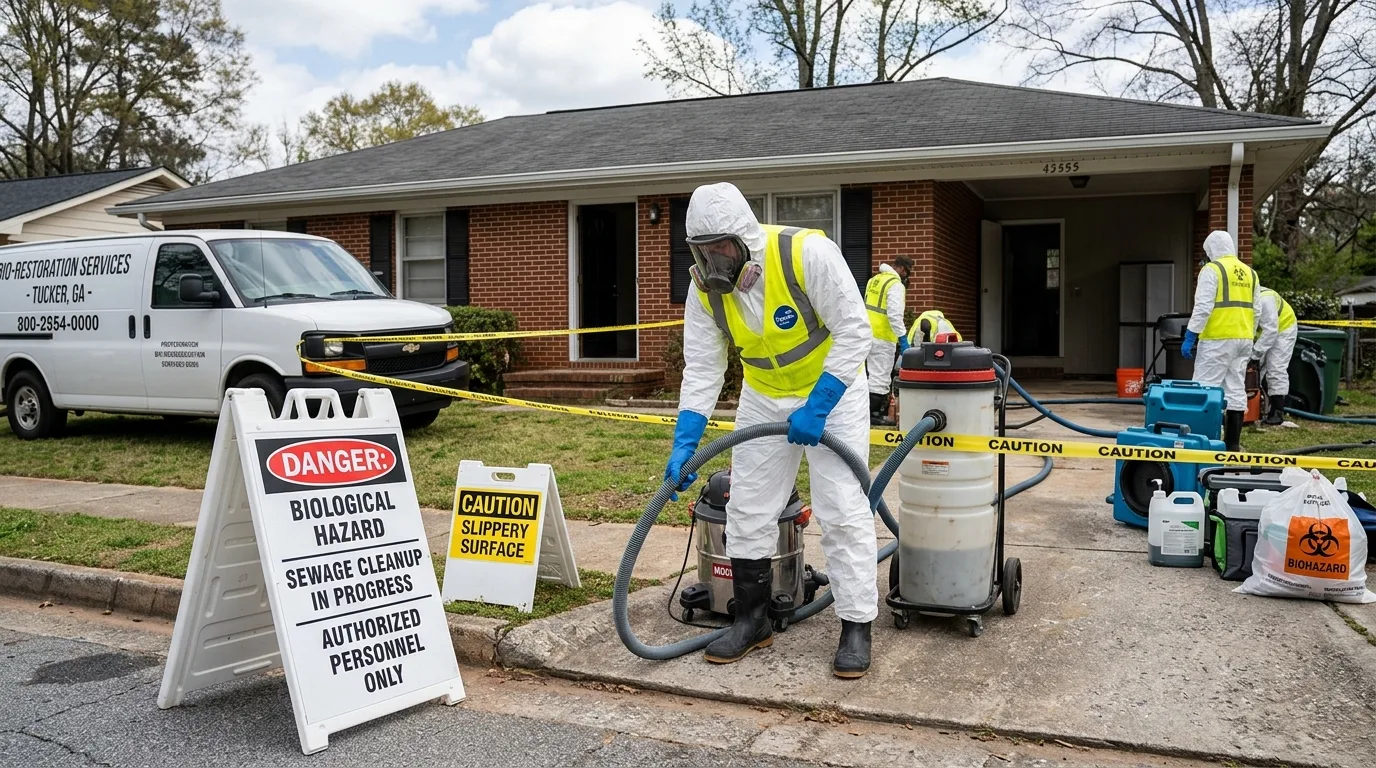
Sewage backup is the water damage event that Dunwoody homeowners are most unprepared for — and the most dangerous to handle incorrectly. Unlike a burst supply line, sewage contains human pathogens: bacteria including E. coli and Salmonella, viruses, and parasites that can cause serious illness from even incidental contact. The correct response to a sewage backup in a Dunwoody home is specific, time-sensitive, and requires professional-grade equipment and protocols. In this guide, we cover exactly what to do in the first minutes of a sewage backup, why Dunwoody homes have elevated backup risk, what professional cleanup involves, and how insurance coverage works for this type of event.
Sewage Backup in Dunwoody?
Evacuate affected areas and call immediately. Category 3 emergency response: (877) 698-1311. 24/7.
The Immediate Response: What to Do Right Now
Step 1 — Evacuate. Do not walk through sewage water. Keep children, pets, and elderly or immunocompromised individuals out of the affected area immediately.
Step 2 — Cut power to the affected area. If you can safely access the circuit breaker panel without stepping through sewage, turn off power to the affected rooms. Do not operate any electrical switches or outlets in rooms with sewage present.
Step 3 — Do not use any plumbing fixtures. Do not flush toilets, run faucets, or use appliances in the house until the backup source is identified and cleared. Additional use will create more sewage output through the same backup point.
Step 4 — Call a restoration professional immediately. Do not attempt DIY cleanup of Category 3 black water with household cleaning products. Household bleach cannot adequately decontaminate porous materials, and improper handling spreads contamination rather than containing it.
Step 5 — Document with photos. If you can photograph affected areas without entering the sewage zone, do so immediately — this documentation is essential for your insurance claim.
Why Sewage Backups Happen in Dunwoody
Summer Storm Sewer Stress
Dunwoody and surrounding DeKalb County receive 52+ inches of rainfall annually, with intense summer thunderstorms delivering large volumes rapidly. When combined sewer systems — which carry both stormwater and sewage in a shared pipe network — become overwhelmed by storm volume, the excess can push backward through residential drain connections. Properties in Dunwoody adjacent to older infrastructure corridors, including those near the Chamblee and Doraville borders where sewer systems serve higher population densities, face elevated backup risk during peak storm events.
Aging CPVC Drain Lines
Dunwoody’s 1985–2005 housing stock introduced CPVC drain fittings that become brittle over decades of thermal cycling and chemical exposure. Unlike supply line failures that produce clean water, CPVC drain line failures that occur below slab or inside wall cavities create Category 3 contamination that can saturate structural materials slowly over weeks before any visible symptoms appear. By the time the homeowner notices an odor or soft floor, significant structural contamination may have already occurred.
Root Infiltration
Dunwoody’s mature tree canopy — one of the community’s defining aesthetic features near the Dunwoody Nature Center area — means that sewer lateral pipes run through soil populated with extensive root systems. Clay-jointed sewer laterals from older construction and PVC laterals with root-accessible joints are vulnerable to root infiltration that creates partial blockages, gradually reducing flow capacity until a backup event occurs.
Category 3 Sewage Cleanup for Dunwoody Homes
Licensed applicators, full sanitization, post-cleanup testing. Call (877) 698-1311.
What Professional Sewage Cleanup Involves
Arrival and assessment: Technicians arrive in full PPE — respirators, eye protection, disposable suits, chemical-resistant gloves. The category of water is confirmed and the source of the backup is identified.
Containment: Work zone is contained using plastic sheeting to prevent cross-contamination to unaffected areas. Negative air pressure may be established to capture airborne pathogens.
Extraction: Category 3-rated extraction equipment removes standing sewage. This equipment is dedicated to Category 3 events and is not used for clean water jobs.
Material removal: All porous materials in contact with sewage — carpet, padding, drywall below the flood line, insulation, baseboard — are removed and bagged for disposal per applicable regulations. These materials cannot be sanitized to a safe standard.
Sanitization: Non-porous structural surfaces receive multiple rounds of HEPA vacuuming, scrubbing, and treatment with EPA-registered antimicrobial and disinfectant agents specifically rated for Category 3 events.
Structural drying: Commercial dehumidifiers and air movers dry all remaining structural materials.
Post-cleanup testing: Air quality sampling and surface ATP testing confirm contamination has been reduced to safe levels before reconstruction.
Insurance Coverage for Sewage Backup in Dunwoody
Standard homeowner’s HO-3 policies do not automatically cover sewage backup. Coverage is available as a specific endorsement — “sewer or drain backup” or “service line” coverage — that is typically inexpensive to add ($40–$150 per year) but dramatically changes your financial position after a sewage event.
Review your policy today, before a backup event. If you do not have sewage backup coverage, contact your insurance agent to add it. If you already have it, confirm the coverage limit — many endorsements cap coverage at $5,000–$10,000, which may be insufficient for a finished basement sewage cleanup in Dunwoody’s market.
For backup events caused by the municipal sewer system failure rather than your private lateral, DeKalb County may bear responsibility for damages. Document the event thoroughly, contact DeKalb County Water & Wastewater Services, and consult with an attorney if needed.
Practical Uses
Preventing root infiltration: Annual sewer scope inspection — running a camera through your sewer lateral — identifies root infiltration, misaligned joints, and partial blockages before they cause a backup. Cost: $200–$400. Preventive value: significant. Highly recommended for Dunwoody homes over 20 years old with mature trees on the property.
Backup prevention during storms: A sewer check valve (backflow preventer) in the drain line prevents municipal sewer backpressure from pushing into your home during storm events. Dunwoody homeowners who have experienced storm-related sewage backup should evaluate this option.
CPVC drain line inspection: If your home was built between 1985 and 2005, have a plumber inspect accessible CPVC drain fittings for brittleness and hairline cracking. Early detection of failing CPVC prevents the slow contamination scenario.
During vacation: Prolonged absence from the home means a slow sewage backup goes undetected for days rather than hours. The resulting damage and contamination is proportionally larger. Consider a water leak sensor near floor drains if you travel frequently.
Frequently Asked Questions
Can I use bleach to clean up a small sewage backup?
Bleach cannot adequately decontaminate porous materials, and household bleach concentrations are not rated for Category 3 sewage events. More importantly, the materials that contacted sewage — carpet, drywall, insulation — must be removed and disposed of, not cleaned. There is no safe way to sanitize sewage-contaminated porous materials in place. Contact a restoration professional for any sewage event that reached porous materials.
Does homeowner’s insurance cover sewage backup damage in DeKalb County?
Only if you have a specific sewer backup endorsement on your policy. Standard HO-3 coverage excludes sewage backup unless the backup was caused by a covered event like a burst supply line upstream. Confirm your coverage with your insurance agent. See our insurance claim guide for DeKalb County for the broader claims picture.
How do I know if the sewage backup is from my private lateral or the municipal system?
If multiple homes on your street are experiencing backup simultaneously, municipal system overload is likely. If the backup affects only your property, your private lateral or household drain system is the probable source. In either case, call a restoration professional immediately and a plumber to assess the drain system. For municipal system failures, contact DeKalb County Water & Wastewater Services and document everything.
Sewage Cleanup in Dunwoody — Professional & Safe
Licensed applicators, Category 3 protocols, post-cleanup testing. Call (877) 698-1311.
Related resources: