Water Damage Risks in Dunwoody Club Estates Neighborhood
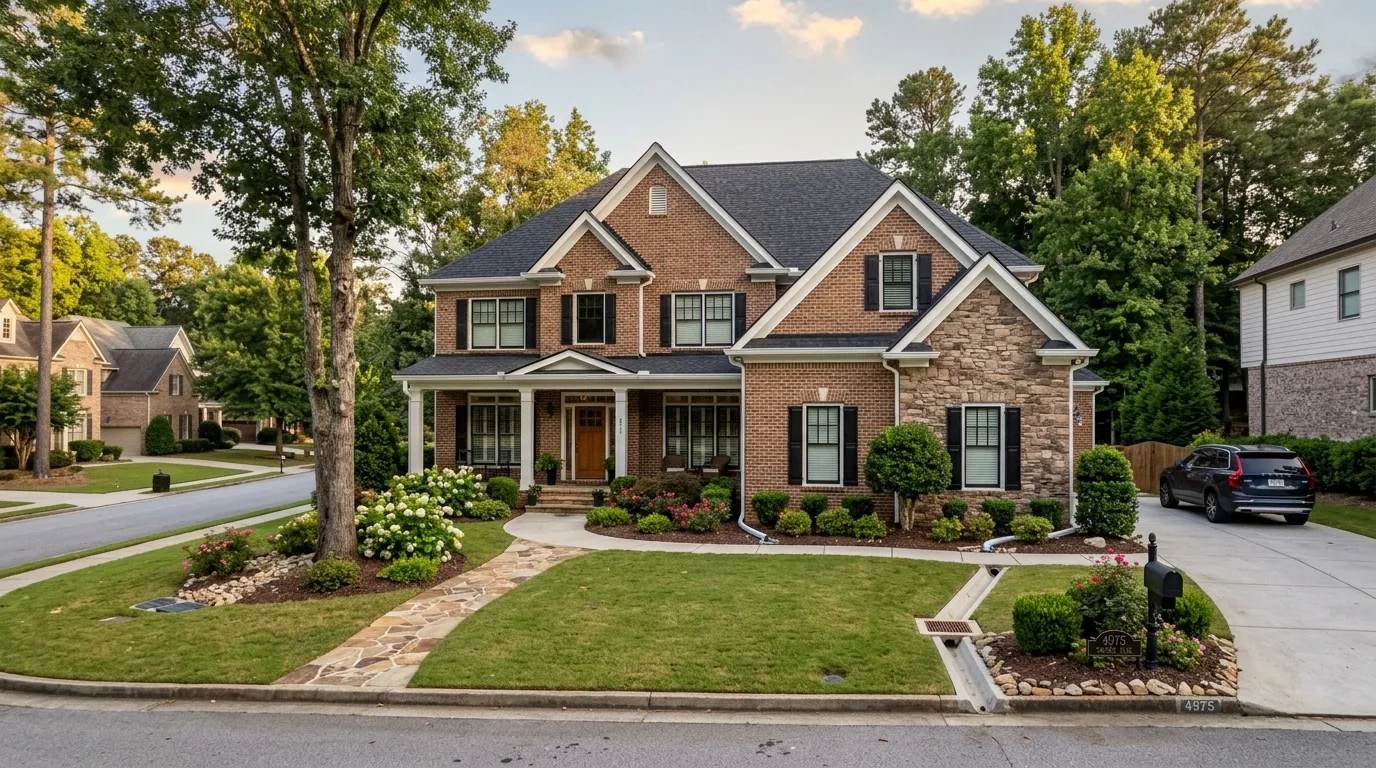
Dunwoody Club Forest and Dunwoody Club Estates represent some of the oldest residential development in Dunwoody, Georgia — brick homes built primarily in the 1970s on large, wooded lots adjacent to the Dunwoody Club golf course. These homes have characteristics that make them distinctly more vulnerable to water damage than Dunwoody’s newer construction: original plumbing systems from an era before CPVC standardization, construction techniques that predate modern moisture management, and drainage systems that are approaching 50 years of service. In this guide, we identify the specific water damage risks for Dunwoody Club Forest and Club Estates homeowners and what modern restoration looks like for these properties.
Water Damage in Dunwoody Club Forest?
We understand 1970s brick construction water damage. Free assessment — call (877) 698-1311.
The 1970s Construction Profile
Homes built in Dunwoody Club Forest and Club Estates during the 1970s were constructed under building codes and with materials that are now approaching or past their service life in several critical systems.
Plumbing: 1970s construction typically used copper supply lines (more durable than CPVC) but original drain lines may include galvanized steel, which corrodes from the inside out and eventually fails with scale buildup and pinhole leaks. Cast iron soil pipes — used for main drain stacks — are durable but joints and fittings can fail over decades. Dunwoody Club Forest homes that have not had plumbing inspections in 20+ years may have drain systems that are significantly degraded without any external indication.
Foundation systems: 1970s Dunwoody construction often relied on perimeter drain tile around footings — typically clay tile that has been in the ground for 50 years. Clay tile is susceptible to crushing under soil movement, joint failure, and root infiltration. When perimeter drain tile fails, there is no path for groundwater to move away from the foundation, and hydrostatic pressure from DeKalb County’s red clay builds until it finds entry pathways through the foundation wall.
Wall construction: 1970s exterior walls typically have minimal insulation by modern standards. Supply lines that run through exterior wall cavities — to bathrooms, kitchens, and laundry areas — may be inadequately insulated against Dunwoody’s freeze-thaw winter events. CPVC supply lines added during subsequent renovations to 1970s homes may now be 30–40 years old and approaching brittleness.
Red Clay Soil and 1970s Dunwoody Club Forest Foundations
The Piedmont red clay soil that underlies all of Dunwoody creates particular challenges for 1970s brick construction in Dunwoody Club Forest. Homes built before modern stormwater management standards were often sited on lots where drainage engineering was minimal — the assumption being that the large lots and existing mature vegetation would provide adequate absorption.
Five decades later, the mature tree canopy on Club Forest lots has both benefits and drawbacks for water management. The trees provide shade that moderates surface temperature, but extensive root systems displace soil near foundations, creating preferred pathways for water movement. Root systems that have infiltrated or broken 50-year-old perimeter drain tile leave foundations with no working perimeter drainage at all.
After summer thunderstorm events, Dunwoody Club Forest homeowners with original drainage systems experience hydrostatic pressure against their foundation walls for 5–7 days — longer than the 3–5 day benchmark for well-drained lots — because the combination of high clay content soil and compromised perimeter drainage means no path exists for groundwater to dissipate. This extended pressure cycle is the primary driver of the recurring basement moisture problems that many Club Forest homeowners report as a chronic characteristic of their property.
Chronic Basement Moisture in Club Forest?
We diagnose the drainage cause — not just the visible water. Call (877) 698-1311.
Practical Uses
Galvanized drain line inspection: Have a licensed plumber run a sewer camera through accessible drain lines in your Dunwoody Club Forest home if it has not been done recently. Galvanized steel drain lines from 1970s construction typically fail at 50–80 years, and internal corrosion is not visible without camera inspection. Scale buildup that has reduced flow by 50–75% of original capacity is common in these homes.
Foundation drainage assessment: If your Club Forest home has a basement and experiences any moisture — even minor dampness — have the perimeter drainage system assessed. Original clay drain tile at 50 years may need replacement or supplementation with an interior French drain system to restore drainage function around the foundation.
Crawl space inspection: Many Club Forest homes have crawl space sections rather than full basements. Crawl spaces in Dunwoody’s humid environment accumulate moisture from the clay soil below even without active flooding. Inspect crawl spaces annually for standing water, condensation on pipes and joists, and any sign of mold or wood decay.
Supply line aging assessment: If your home was renovated in the 1985–2005 period and CPVC supply lines were installed during that renovation, those lines may now be 20–40 years old. Ask your plumber to inspect CPVC fittings and joints for brittleness or hairline cracking during the next service call.
Post-renovation water damage: Many Club Forest homeowners have completed kitchen and bathroom renovations in recent years. New appliance connections (dishwashers, refrigerators with ice makers) to existing supply lines create new potential failure points that benefit from inspection 1–2 years after installation.
Mold Risk in Dunwoody Club Forest Homes
The combination of 1970s wall construction (lower R-value, more thermal bridging), original concrete block basement walls that have experienced decades of moisture cycling, and Dunwoody’s high ambient humidity creates significant mold risk for Club Forest homes — even without any acute water damage event. Chronic condensation inside wall cavities during winter (when outdoor cold surfaces meet humid indoor air) and during summer (when air conditioning creates cold surfaces adjacent to very humid outdoor conditions) can sustain mold growth without any visible water source.
This is distinct from mold that follows a specific water damage event — it’s a background condition in homes where the building envelope has been cycling through moisture stress for decades. If a Dunwoody Club Forest home has a persistent musty odor that doesn’t respond to surface cleaning or ventilation, a professional moisture and mold assessment is warranted. See our mold after water damage guide for indicators that the problem may be more systemic than surface.
Cost Considerations for Club Forest Restoration
Restoration work in Dunwoody Club Forest homes carries premium costs compared to Dunwoody’s newer construction for several reasons: original construction materials (brick, older drywall, plaster in some areas) require specialized matching; reconstruction to current code adds cost when original systems were built under older codes; and the high market values of Club Forest homes — ranging $785K–$1.13M — mean that insurance adjusters will scrutinize large claims more carefully.
Water damage restoration costs in the Atlanta metro average $8,546, but Club Forest basement restoration jobs with drainage system replacement routinely run $15,000–$30,000 when the full scope includes interior French drain installation, foundation crack repair, and finished space reconstruction. Understanding this cost range before an event — and reviewing insurance coverage for adequacy — is valuable planning for Club Forest homeowners.
Frequently Asked Questions
How do I know if my Club Forest home has failing perimeter drainage?
Signs include: basement walls that are consistently damp or show efflorescence (white mineral deposits), wet spots at the base of basement walls after rainstorms, soil that stays wet adjacent to the foundation for days after rain, and basement floors that show moisture seeping through the concrete surface. Any of these indicators warrants a drainage system inspection by a qualified contractor. See our red clay soil guide for more on how soil conditions drive these symptoms.
Should I replace my Club Forest home’s galvanized drain lines proactively?
If your drain lines are original 1970s galvanized and have not been camera-inspected, a camera inspection is a low-cost, high-value diagnostic. If the camera reveals significant internal corrosion or scale buildup, proactive replacement (typically to PVC or ABS drain pipe) before a failure event makes financial sense — repair of a collapsed or severely blocked galvanized line is more disruptive and expensive than a scheduled replacement. See our water damage restoration guide for Dunwoody for how plumbing assessments fit into the restoration process.
Are Club Forest homes eligible for the same insurance coverage as newer Dunwoody homes?
Yes — standard HO-3 homeowner’s insurance coverage is available for Club Forest homes regardless of construction age. However, older homes may face higher premiums or higher inspection requirements at policy issuance or renewal. Some insurance carriers require updates to electrical, plumbing, or HVAC systems before issuing coverage on homes of a certain age. Review your policy annually to confirm coverage adequacy for current replacement costs, which have increased substantially in Dunwoody’s housing market.
Dunwoody Club Forest Water Damage Specialists
We know 1970s Dunwoody construction — and the DeKalb County conditions that affect it. Call (877) 698-1311.
Related resources: