Preventing Frozen Pipes in Dunwoody: A Winter Guide
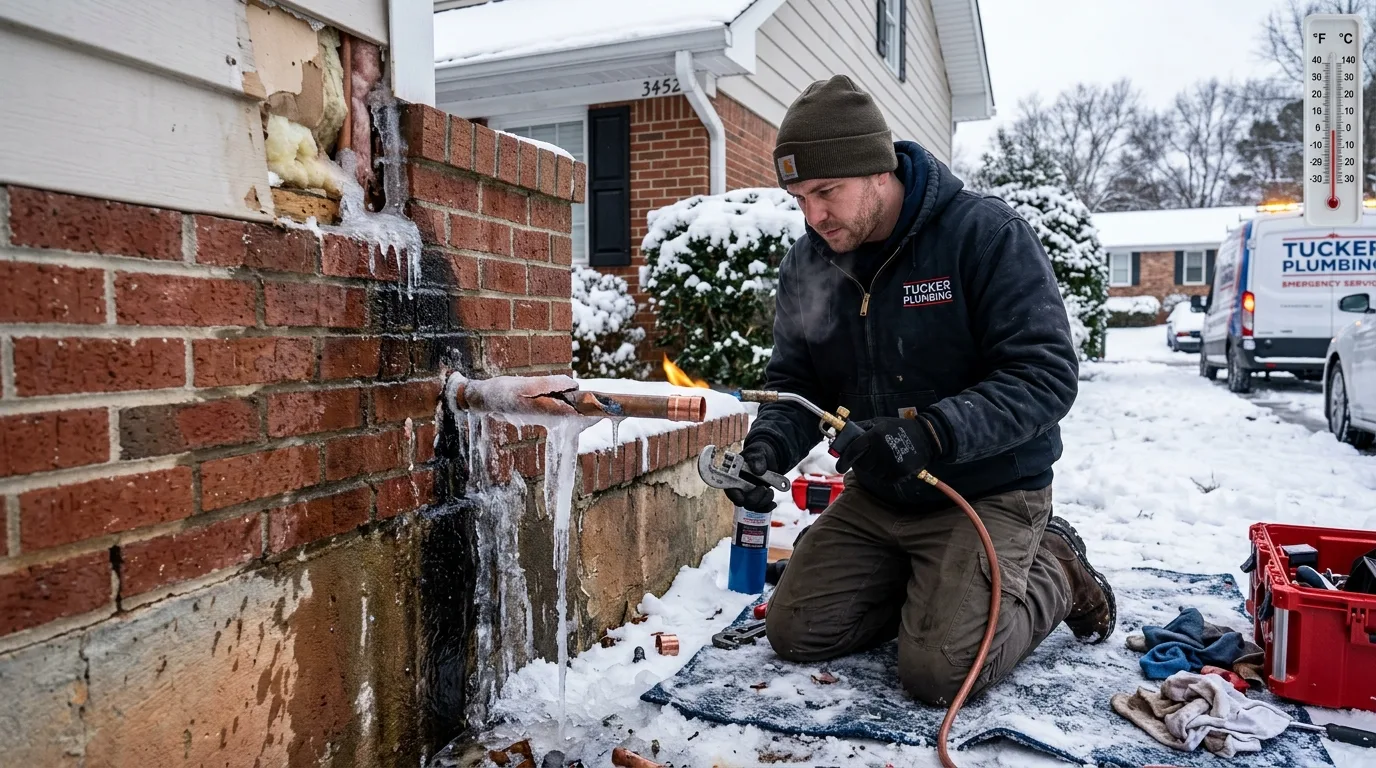
Dunwoody homeowners often underestimate their pipe burst risk — Georgia is the South, and the assumption is that it doesn’t get cold enough to freeze pipes. That assumption costs Dunwoody residents hundreds of thousands of dollars in water damage claims every winter. The freeze-thaw cycles that cycle through December through February don’t need to drop temperatures to single digits to burst pipes in Dunwoody’s housing stock — the CPVC supply line fittings that were installed throughout the 1985–2005 construction boom become brittle with age, and a single night at 20°F is sufficient to cause failures that would have been resisted by newer PEX plumbing. In this guide, we cover the specific pipe freeze risk factors in Dunwoody, prevention strategies for each risk category, and what to do if a pipe freezes or bursts in your home.
Burst Pipe in Your Dunwoody Home?
24/7 emergency water extraction and restoration. Call Dunwoody Water Damage Restoration at (877) 698-1311.
Why Dunwoody Has Elevated Pipe Freeze Risk
Dunwoody’s pipe freeze risk combines two factors that individually wouldn’t be alarming but together create elevated vulnerability.
Georgia freeze-thaw patterns: Dunwoody’s winters feature repeated temperature cycling through the freezing point — temperatures that drop to the upper 20s or low 30s at night and then warm to the 50s during the day. This cycling is actually more damaging to certain pipe materials than sustained freezes, because CPVC fittings expand and contract with each thermal cycle. A CPVC fitting that has gone through 10–15 freeze-thaw cycles may be structurally compromised and fail during a moderate cold snap that would not affect newer PEX plumbing or copper.
The CPVC legacy: Dunwoody has one of the highest concentrations of 1985–2005 construction in the Atlanta metro area. CPVC was the dominant residential supply line material during this period — nearly every home built in Dunwoody during those two decades uses CPVC for supply lines and fittings. CPVC has a service life of approximately 25–40 years under ideal conditions, but thermal cycling, chlorine content in Atlanta’s municipal water, and UV exposure (in attics with inadequate insulation) all accelerate embrittlement. Many of these homes are now hitting the end of their CPVC life expectancy, and pipe failures are increasing accordingly across neighborhoods from Dunwoody Club Forest to the newer portions of Hidden Branches.
Where Pipes Are Most Vulnerable in Dunwoody Homes
Exterior wall supply lines: Supply lines that run through exterior walls — particularly on the north and west sides of the home — are exposed to below-freezing temperatures through inadequately insulated wall cavities. In Dunwoody’s 1970s-era brick homes in Dunwoody Club Forest, original insulation in exterior walls is often thin or settled, leaving supply lines vulnerable.
Garage supply lines: Water supply lines that run through attached garages — to laundry connections, utility sinks, or past the garage to outdoor spigots — are uninsulated and exposed to outdoor temperatures whenever the garage door is open or on cold nights when the garage drops to ambient temperature.
Attic supply lines: Supply lines that rise into unconditioned attics to supply second-floor bathrooms or HVAC systems are exposed to attic temperatures that can drop well below outdoor air temperature on cold nights due to radiant heat loss. In Dunwoody’s older construction, attic insulation over main ceilings may be inadequate, leaving attic-routed supply lines unprotected.
Crawl space supply lines: Supply lines in unconditioned crawl spaces are exposed to outdoor air infiltration on all sides. Homes in Dunwoody’s Meadowlake and Brooke Farm communities with traditional crawl space construction should inspect insulation on crawl space supply lines every fall.
Outdoor spigots: Hose bibs and outdoor irrigation system supply lines are directly exposed. Garden-variety frost-free spigots provide moderate protection, but irrigation supply lines in the ground can still freeze at shallow depths during extended cold periods.
Emergency Response for Dunwoody Pipe Bursts
If prevention fails, we respond 24/7 with truck-mounted extraction. Call (877) 698-1311.
Winter Protection Strategy for Dunwoody Homes
Know your shutoff valve location. Before winter, confirm you know where your home’s main water supply shutoff is located and that it is operational. A pipe burst at 2am during a power outage is not the moment to discover the shutoff valve is stuck. The shutoff is your most important emergency resource.
Insulate vulnerable supply lines. Foam pipe insulation (tubular foam) on supply lines in unconditioned attics, crawl spaces, and garages is inexpensive and highly effective. Installation before the first cold period of the season takes a few hours for most homes.
Let faucets drip on freeze nights. A slow drip from faucets on the far ends of supply lines relieves pressure buildup in frozen sections, often preventing burst events even when a section of pipe freezes. This applies to both hot and cold supply lines — both are vulnerable.
Keep interior temperature above 55°F. If you will be away from your Dunwoody home during cold periods, set the thermostat to maintain at least 55°F inside. Vacant homes where thermostats are turned completely off or set to 45°F are the most common source of burst pipe calls in Dunwoody each winter.
Open cabinet doors under sinks. Cabinet doors under bathroom and kitchen sinks on exterior walls trap warm air from the room from reaching the supply lines. Leaving cabinet doors open on freeze nights allows warm room air to circulate around under-sink supply lines.
Disconnect garden hoses. A garden hose left connected to an outdoor spigot traps water in the frost-free spigot’s drain path, defeating its freeze-protection mechanism. Disconnect all hoses before the first freeze of the season.
If a Pipe Freezes
If a faucet stops producing water during cold weather but there is no burst yet — a frozen section is suspected — locate the vulnerable section (exterior walls, attic, crawl space) and apply gentle heat with a hair dryer or heating pad. Never use an open flame. Apply heat starting from the faucet end of the frozen section and work toward the cold source. Do not leave any heating source unattended.
If you hear or see a pipe burst, shut off the main supply valve immediately and call for emergency water extraction. A supply line under pressure can release many gallons per minute — delay directly translates to damage extent.
Frequently Asked Questions
How common are pipe bursts in Dunwoody winters?
More common than most residents expect. The freeze-thaw cycling that Dunwoody experiences — multiple nights per winter below freezing, alternating with warm days — stresses CPVC fittings repeatedly. The Atlanta metro sees significant water damage claims from pipe burst events every winter, with Dunwoody’s aging CPVC housing stock contributing a disproportionate share. Learn about the CPVC factor in our complete water damage guide for Dunwoody.
Should I repipe my Dunwoody home from CPVC to PEX?
If your home’s CPVC is over 25 years old and showing signs of brittleness (hairline cracks at fittings, discoloration, brittleness), a full repipe to PEX is worth evaluating. PEX is more flexible, handles freeze-thaw better, and does not suffer the same chlorine embrittlement that CPVC does in Atlanta’s municipal water supply. Repiping cost runs $4,000–$15,000 depending on home size. The calculation: compare repipe cost against the combined cost of water damage events from repeated CPVC failures over the next 10–15 years.
What should I do about my outdoor irrigation system for winter?
Dunwoody’s winter temperatures are typically mild enough that most seasons don’t require a full irrigation system winterization (blow-out), but a cold snap below 25°F can freeze supply lines in the first few inches of soil. At minimum: shut off the irrigation supply valve, drain the supply manifold, and consider adding insulation to the backflow preventer. If you experience Dunwoody winters with extended sub-freezing periods, a professional blow-out provides added protection. See our emergency water extraction guide for what to do if the system does freeze and rupture.
Winter Water Damage in Dunwoody — 24/7 Response
Pipe bursts don't wait for business hours. Call Dunwoody Water Damage Restoration at (877) 698-1311 any time.
Related resources: